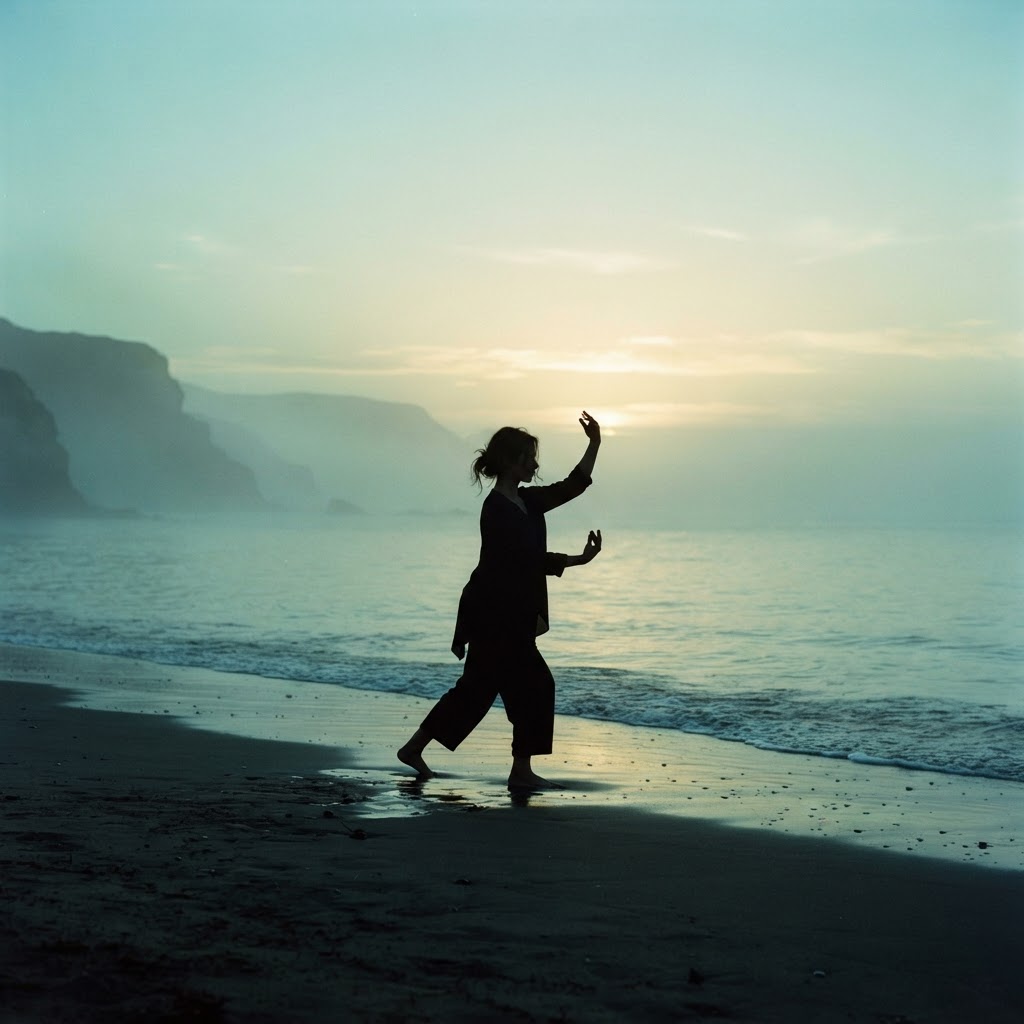
Movement can be meditation in motion — a way of meeting the body that stillness alone sometimes cannot reach.
When experience gets stuck, it often lives in the body as held posture, restricted breath, or movement that has gone quiet. Conscious movement invites that held energy to begin to circulate again, slowly and on its own terms. The point is not performance but presence: feeling the foot meet the ground, the spine turn, the weight shift.
Traditional systems like qi gong and tai chi have understood this for centuries, weaving breath, attention, and slow motion into a single practice. More contemporary forms — authentic movement, somatic yoga, expressive dance — approach the same territory from a different door.
Common forms include:
- Qi Gong — slow, coordinated movement and breath to cultivate and circulate energy.
- Tai Chi — a flowing sequence of postures practiced as a moving meditation.
- Authentic Movement — moving with eyes closed, following the body's impulses rather than a plan.
- Somatic Yoga — gentle, sensation-based yoga focused on internal experience over shape.
The body often knows how to move before the mind gives it permission. Conscious movement is, in part, the practice of getting out of the way — and discovering that the body has its own intelligence, its own timing, and its own way home.