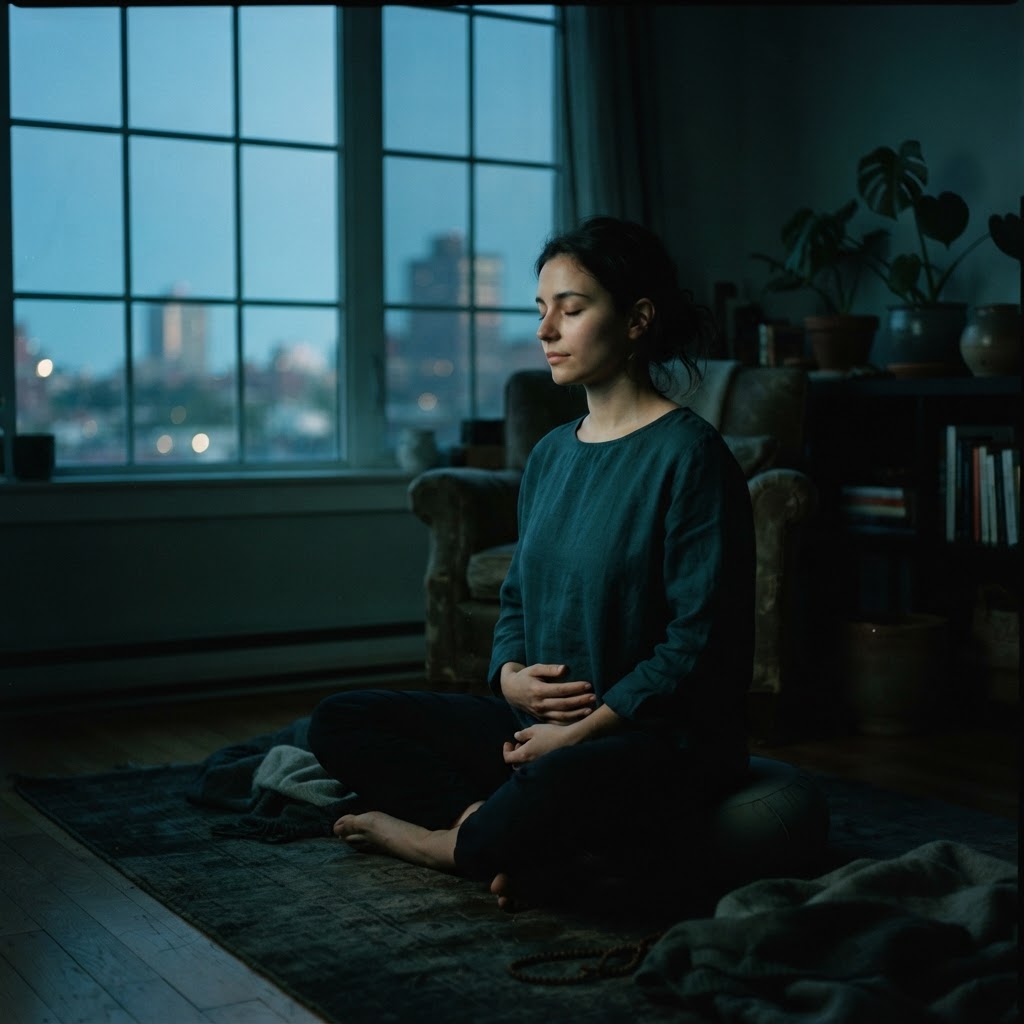
The breath is the most direct bridge we have to the nervous system — and it is one of the few bodily functions that runs both automatically and under our conscious control.
When we feel threatened, the breath quickens and rises into the chest; when we feel safe, it slows and drops into the belly. This is the autonomic nervous system at work, shifting between mobilization and rest. Polyvagal theory describes these states with useful precision: sympathetic arousal (fight or flight), ventral vagal (safe and social), and dorsal vagal (shutdown or freeze). The breath reaches into all of them.
A long, slow exhale is the simplest way to nudge the system toward safety. It gently engages the vagus nerve, signaling that the immediate danger has passed. Done regularly, breath practice is less a quick fix than a way of teaching the nervous system a new baseline.
Common practices include:
- Slow exhale — lengthening the out-breath to engage the calming branch of the nervous system.
- Coherent breathing — a steady rhythm of about five or six breaths per minute to balance the system.
- Box breathing — equal inhale, hold, exhale, and hold, used to steady a racing mind.
- 4-7-8 breath — a longer held exhale pattern often used to support sleep and settling.
The breath is not a way to force the body into calm — that effort usually produces the opposite. It is a way of offering the nervous system a gentler signal, over and over, until the body begins to believe it is safe enough to rest.