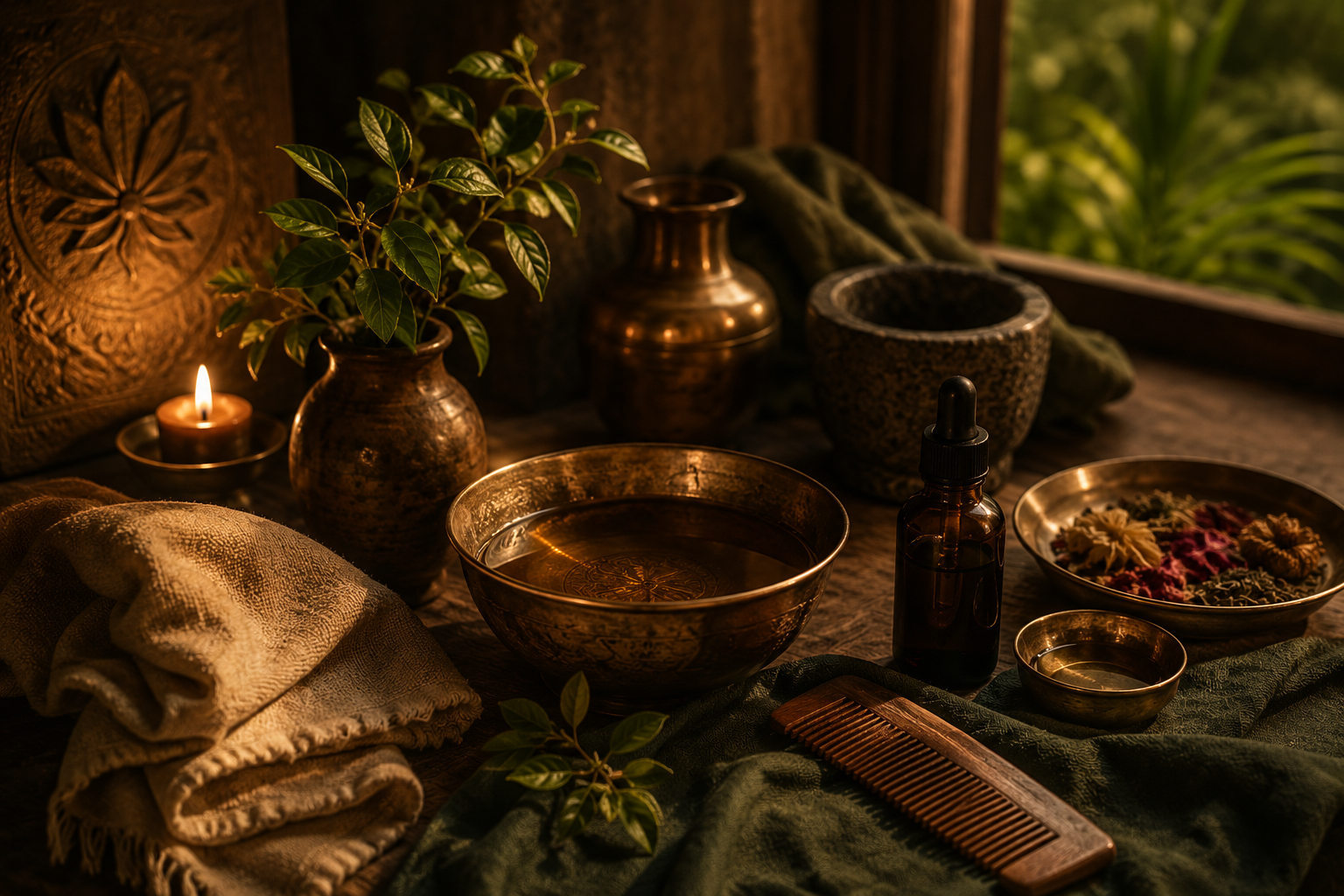
Ayurveda gives the head a kind of attention we rarely give it ourselves. Head and scalp oiling, known as shiro abhyanga, uses warm oil and slow massage to nourish the scalp and hair while easing some of the tension that quietly gathers around the head, face and neck. Sesame oil is often chosen for its warmth and richness, while coconut oil has a lighter, cooling quality. Herbal oils prepared with plants such as brahmi or bhringraj have also been used for generations in Ayurvedic hair care. The oil is worked into the scalp with the fingertips and allowed to remain for a while before washing. There is nothing hurried about it.
Part of its appeal is easy to understand. The oil conditions the scalp and hair, while the movement of the fingers brings warmth and gentle stimulation to the skin; spending a little time at the temples, around the ears and along the base of the skull can also reveal just how much tension has been sitting there unnoticed. Ayurveda traditionally recommends head oiling for healthy hair and scalp, restful sleep and calming vata—the quality of movement and activity that can become especially apparent when the mind refuses to become quiet. Modern research hasn’t established all of these traditional claims. But there is wisdom in the underlying observation. The mind and the body are not nearly as separate as they sometimes seem.
To practice, warm a tablespoon or two of oil until it feels pleasant against the skin, then part the hair in several places and apply small amounts directly to the scalp. Using the pads of your fingers rather than your nails, make slow circles across the entire head, moving from the hairline toward the crown and down toward the neck; linger at the temples, behind the ears and anywhere your hands find tension. Leave the oil on for twenty or thirty minutes, or longer if you wish, then wash the hair gently with shampoo. Some people leave the oil in overnight, with a towel over the pillow to protect the bedding. However long you leave it, the massage itself is worth taking slowly. We spend an extraordinary amount of time asking something of our heads. It feels quite different to simply care for one.